| Blogs
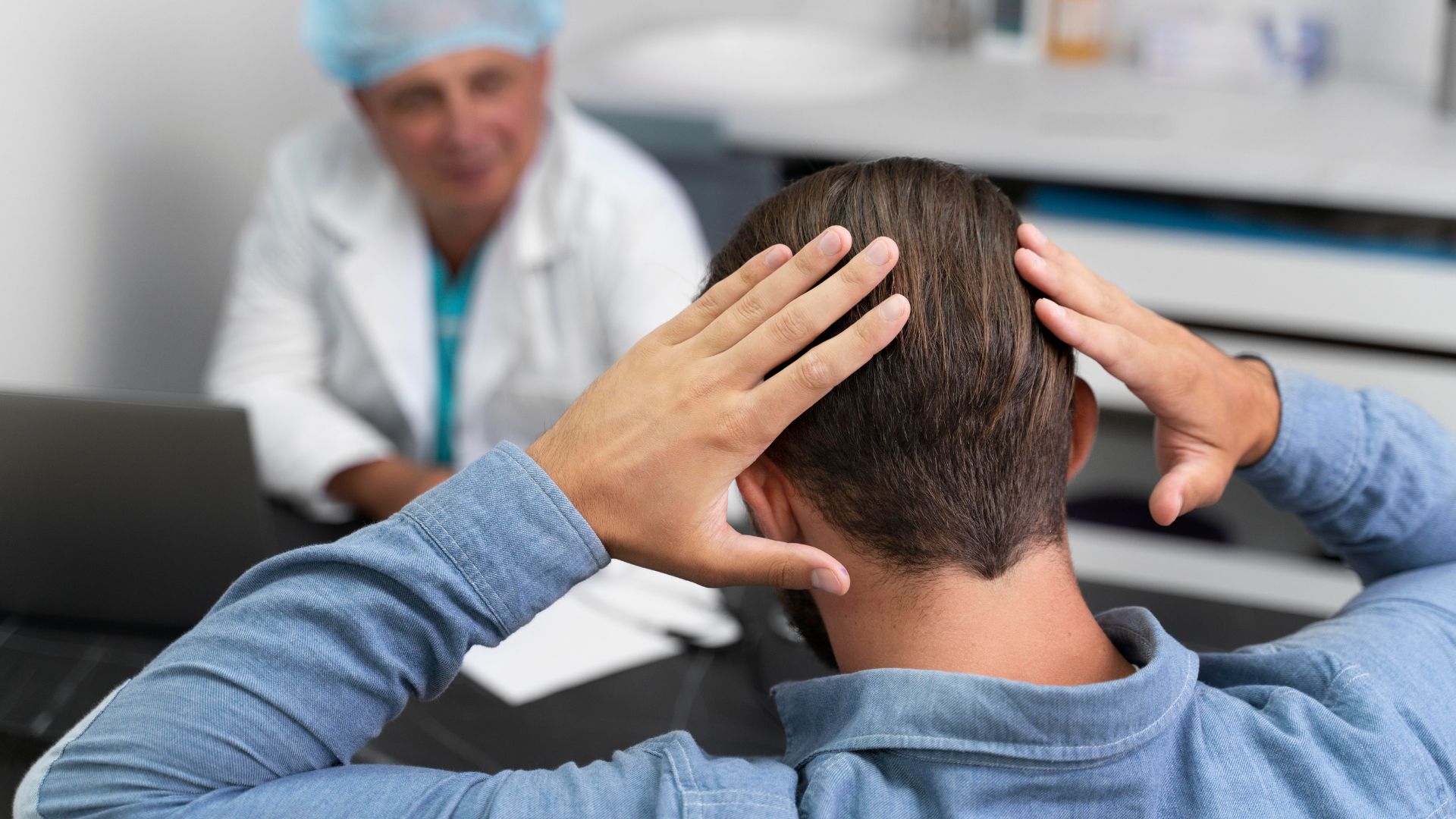
What Is a Hair Transplant Donor Area?
What is a hair transplant donor area? Learn where donor hair is taken from and why its quality matters for successful hair transplant

What Is a Hair Transplant Donor Area?
The donor area is one of the most important parts of a successful hair transplant because it determines graft quality, coverage potential, and long-term natural results.
Table of Contents
- What Is a Hair Transplant Donor Area?
- Why Is the Donor Area Important?
- What Makes a Good Donor Area?
- What Is an Insufficient Donor Area?
- Can Hair Be Taken From Other Parts of the Body?
- Hair Transplant Donor Area Recovery Timeline
- What Does Donor Area Healing Feel Like?
- Does Hair Grow Back in the Donor Area?
- Can Shock Loss Occur?
- How Can You Protect the Donor Area?
- Frequently Asked Questions
What Is a Hair Transplant Donor Area?
The success of a hair transplant procedure depends on many factors, but one of the most important is the hair transplant donor area. While many patients focus primarily on the recipient area where new hair will grow, the donor area is actually the foundation of the entire procedure.
Understanding how the hair transplant donor area works, how it heals, what affects donor capacity, and what patients can expect after surgery is essential for making informed decisions.
The hair transplant donor area is the region where healthy hair follicles are harvested for transplantation. In most patients, the donor area is located on the back and sides of the scalp because hair follicles in these regions are genetically resistant to hair loss.
At Hair of Istanbul, donor area evaluation is one of the key steps in planning natural-looking and long-lasting hair restoration results.
Why Is the Hair Transplant Donor Area Important?
The donor area provides the grafts needed to restore hair density in thinning or bald regions. The quality of donor follicles directly affects the natural appearance of the final result.
- The donor area provides the grafts needed for transplantation.
- Donor follicle quality affects the final hair transplant result.
- Donor density determines how many grafts can safely be extracted.
- A healthy donor area allows better long-term planning.
- Proper donor management protects the natural appearance of the scalp.
What Makes a Good Hair Transplant Donor Area?
Not all donor areas are identical. Some patients naturally have greater donor reserves than others. A high-quality donor area usually contains strong, thick hair follicles with good density and stable growth patterns.
Characteristics of an Ideal Donor Area
- High follicular density throughout the donor zone.
- Thick and healthy hair shafts.
- Minimal signs of miniaturization or ongoing hair loss.
- Even distribution of donor hair.
- Adequate donor reserves for future procedures.
- Strong genetic resistance to pattern hair loss.
What Is an Insufficient Hair Transplant Donor Area?
An insufficient hair transplant donor area means donor density is limited, previous procedures have reduced donor reserves, or advanced hair loss has decreased available grafts.
Common Causes of Limited Donor Supply
- Advanced male or female pattern baldness.
- Naturally low hair density.
- Previous hair transplant procedures.
- Scarring in the donor area.
- Fine hair characteristics.
- Diffuse thinning affecting donor regions.
Even patients with limited donor reserves may still be candidates for transplantation. However, the treatment plan should be adjusted according to donor capacity.
Can Hair Be Taken From Other Parts of the Body?
While scalp hair remains the preferred source for graft harvesting, alternative donor sources may be considered in selected cases.
- Beard hair may provide additional grafts for selected patients.
- Chest hair can sometimes be used when scalp donor supply is limited.
- Body hair transplantation may help improve coverage in certain situations.
- Facial hair can occasionally support crown or mid-scalp restoration.
However, scalp hair generally remains the gold standard because it most closely matches natural hair growth patterns.
Hair Transplant Donor Area Recovery Timeline
Recovery of the hair transplant donor area is often faster than many patients expect. Although some discomfort is normal during the first days, visible healing usually progresses quickly.
First Week After Surgery
- Mild redness may appear in the donor area.
- Small extraction sites begin healing.
- Minor sensitivity or tightness can occur.
- Scabbing may develop around extraction points.
Weeks Two to Four
- Scabs typically disappear naturally.
- Redness continues fading.
- Donor hair begins blending with surrounding hair.
- Most visible signs become less noticeable.
Months Two to Six
- The donor area continues maturing.
- Hair growth normalizes.
- Temporary shock loss may recover.
- Extraction points become increasingly difficult to detect.
What Does Hair Transplant Donor Area Healing Feel Like?
Patients often wonder what sensations are normal during healing. Mild burning, tenderness, itching, redness, swelling, and scabbing may occur during the early recovery period.
- Donor area burning sensation: A mild burning sensation may occur during the first days.
- Donor area pain: Minor discomfort is common and usually improves quickly.
- Donor area itching: Itching often indicates healing, but scratching should be avoided.
- Donor area redness: Temporary redness may persist for days or weeks.
- Donor area scabbing: Small scabs should be allowed to fall away naturally.
Does Hair Grow Back in the Hair Transplant Donor Area?
In FUE hair transplant procedures, extracted follicles do not regenerate in the exact locations from which they were removed. However, surrounding hairs continue growing normally, allowing the donor area to maintain a natural appearance when extraction is performed correctly.
You can review the FUE hair transplantation page for more details about the technique.
- Extracted follicles do not grow back in their original locations.
- Remaining donor hairs continue normal growth.
- Proper extraction patterns help maintain visual density.
- Experienced surgeons avoid overharvesting.
- Natural donor appearance can often be preserved successfully.
Can Shock Loss Occur in the Hair Transplant Donor Area?
Yes. Temporary donor area shock loss can occur after surgery. Shock loss refers to temporary shedding of existing hairs due to surgical stress. In most cases, these hairs recover and begin growing again within several months.
- Usually temporary.
- Does not necessarily indicate permanent damage.
- More common in sensitive scalps.
- Recovery often occurs naturally.
- Proper aftercare may support healing.
How Can You Protect the Hair Transplant Donor Area?
Proper care helps support healing and maintain donor appearance. Patients should follow post-operative instructions carefully and avoid actions that may irritate the donor area.
- Follow all post-operative instructions carefully.
- Avoid scratching the donor region.
- Protect the scalp from excessive sun exposure.
- Use only approved hair care products.
- Avoid intense physical activity during early healing.
- Stay hydrated and maintain healthy nutrition.
- Attend follow-up appointments regularly.
Frequently Asked Questions About Hair Transplant Donor Area
How long does the hair transplant donor area take to heal?
Most visible healing occurs within two to four weeks, although complete donor area maturation may continue for several months.
Does hair grow back in the hair transplant donor area?
Extracted follicles do not regrow in the exact extraction sites, but surrounding hairs continue growing normally and help maintain overall density.
Can a hair transplant donor area become depleted?
Yes. Excessive extraction or multiple procedures may reduce available donor reserves, which is why careful planning is important.
Is donor area pain normal after a hair transplant?
Mild discomfort, tenderness, or tightness is common during the first days of recovery and usually improves quickly.
What helps donor area healing after a hair transplant?
Following proper aftercare instructions, staying hydrated, protecting the scalp, and maintaining a healthy lifestyle can support recovery.
Can donor area shock loss occur?
Yes. Temporary shock loss may occur in some patients, but it often resolves naturally as recovery progresses.
Will people notice hair was taken from my donor area?
When extraction is performed properly and donor management is planned carefully, visible signs are often minimal and become less noticeable over time.
Can someone else’s hair be used as a donor area?
No. Modern hair transplantation uses the patient’s own follicles because transplanted hair from another person would not be biologically compatible.
Is everyone a candidate for a hair transplant donor area?
No. Each patient requires a detailed donor area assessment to determine graft availability, density, and suitability for transplantation.
Why is the hair transplant donor area considered important?
Because the donor area provides the permanent follicles used for transplantation. Without a healthy and properly managed donor area, achieving natural and long-lasting results becomes more difficult.
Plan Your Hair Transplant with Hair of Istanbul
Learn more about advanced hair restoration solutions and FUE hair transplant techniques with Hair of Istanbul.