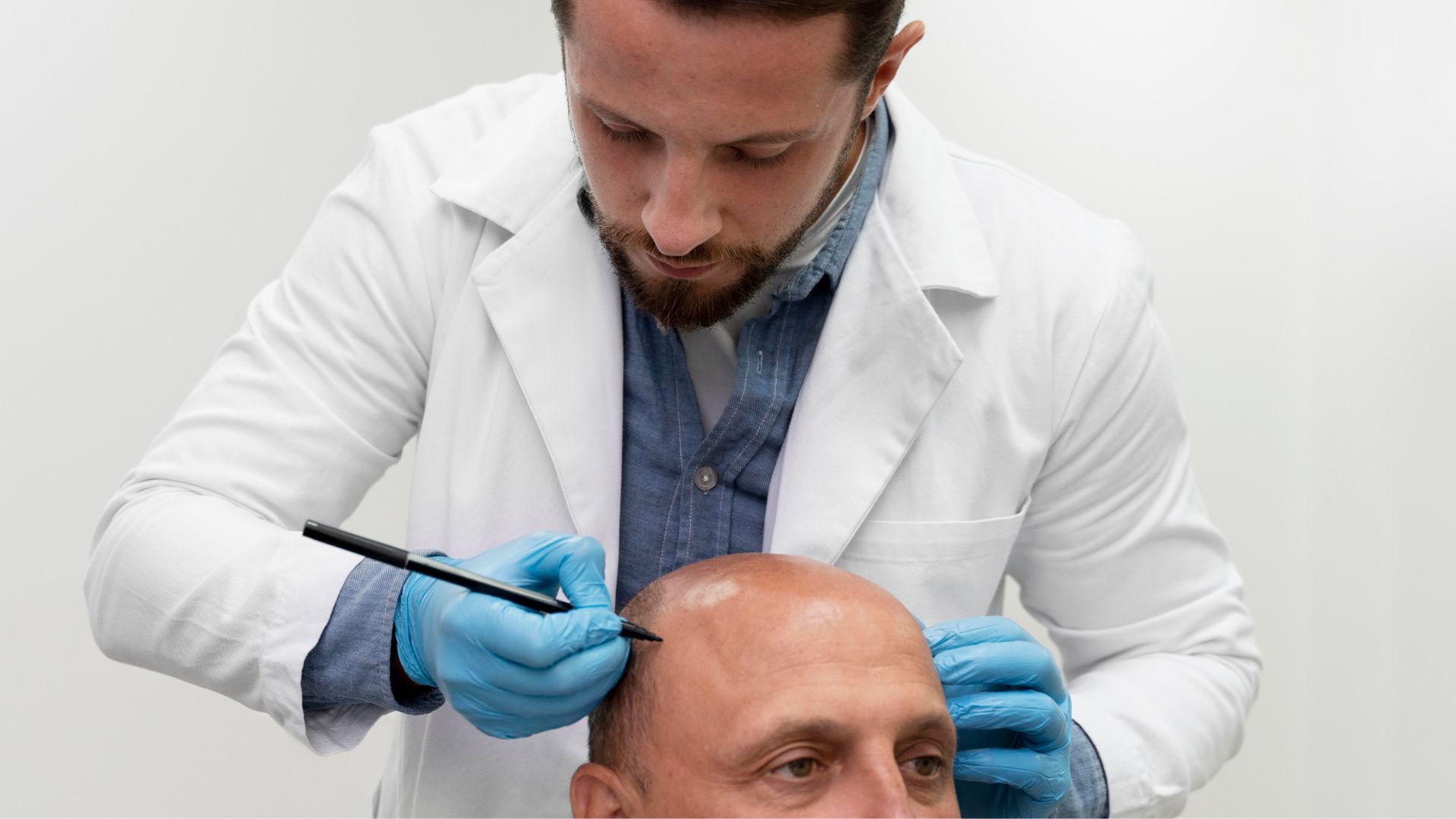
Hair Transplant Consultation: What to Expect
Learn what happens during a hair transplant consultation, from scalp analysis and graft planning, costs, expectations and next steps.

Patient Guide
Black · White
HAIR OF ISTANBUL
Hair Transplant Consultation: What to Expect Before Your Procedure
A structured guide to consultation, donor assessment, graft planning, hairline design, technique selection, medical screening and realistic expectations.
Consultation Guide
HAIR
×
PLAN
×
PLAN
Assessment, donor planning and realistic expectations in a clean black-and-white clinical layout.
Start with a Structured Assessment
Consultation should evaluate hair loss, donor capacity, medical history, realistic graft planning, possible techniques and long-term goals before treatment is confirmed.
Table of Contents▾
- What Is a Hair Transplant Consultation?
- Why Is a Hair Transplant Consultation Important?
- How Does an Online Hair Transplant Consultation Work?
- Which Details Are Requested During an Online Consultation?
- Can Photographs Determine the Exact Graft Number?
- How Is Hair Loss Assessed During the Consultation?
- How Is the Donor Area Examined?
- How Is the Graft Number Estimated?
- How Is the Hairline Discussed During Consultation?
- Can 3D Hairline Analysis Be Used?
- Which Technique Is Selected During Consultation?
- Why Is Medical History Important?
- Which Results Should Be Discussed?
- Questions to Ask During a Hair Transplant Consultation
- What Does a Good Consultation Include?
- Warning Signs During a Consultation
- Why Consider a Hair of Istanbul Consultation?
- Frequently Asked Questions
This content is intended for general informational purposes only and does not replace personalized medical evaluation, diagnosis, or treatment advice.
A hair transplant consultation is the first structured stage of the hair restoration process. It allows the medical team to evaluate the patient’s hair loss, donor area, medical history, expectations and potential suitability for surgery.
A proper consultation should involve more than providing an estimated graft number or treatment price. It should help determine whether transplantation is appropriate, how the donor supply can be used safely and what type of result may be realistic.
A comprehensive consultation should answer several questions:
– Is the patient a suitable candidate?
– What type of hair loss is present?
– Is the donor area strong enough?
– How many grafts may be extracted safely?
– Which recipient areas should receive priority?
– Where should the hairline be positioned?
– Which technique may be appropriate?
– Which medical tests are required?
– What should the patient expect during recovery?
– Are the patient’s goals realistic?
Hair of Istanbul states that its treatment journey may begin with an online preliminary assessment before the patient travels to Istanbul. Photographs, hair-loss pattern, donor capacity and individual goals are reviewed to prepare an initial treatment strategy. The plan is then confirmed through an in-clinic examination and pre-operative screening. (Hair of Istanbul)
What Is a Hair Transplant Consultation?
A hair transplant consultation is a medical and aesthetic assessment used to determine whether hair transplantation is suitable and how the treatment should be planned.
It may include:
Reviewing the history of hair loss
Examining the scalp and existing hair
Assessing the donor area
Evaluating hair-shaft thickness
Estimating a safe graft range
Discussing the proposed hairline
Selecting a suitable technique
Reviewing medical history
Explaining limitations and risks
Discussing recovery and follow-up
Answering the patient’s questions
The purpose should be to support an informed decision rather than simply encourage the patient to book surgery.
Why Is a Hair Transplant Consultation Important?
Hair transplantation redistributes existing follicles. It does not create an unlimited supply of new hair.
The donor area is a limited resource, and extracted follicles do not normally regenerate at the same points. Poor assessment may therefore lead to:
Donor overharvesting
Patchy donor density
An unnatural hairline
Incorrect graft distribution
Poor growth direction
Inadequate planning for future hair loss
Unrealistic patient expectations
The need for revision surgery
A detailed consultation allows the team to plan for both the patient’s current appearance and potential future thinning.
How Does an Online Hair Transplant Consultation Work?
An online hair transplant consultation allows a patient to receive an initial assessment without visiting the clinic in person.
The patient is generally asked to provide clear photographs showing:
The frontal hairline
Both temples
The top of the scalp
The mid-scalp
The crown
The back of the donor area
Both sides of the donor area
Photographs should be taken in good lighting without filters. Hair fibres, concealers and styling products should not hide the scalp.
Hair of Istanbul states that its online pre-assessment reviews photographs, the patient’s hair-loss pattern, donor capacity and treatment goals before an initial plan is prepared. (Hair of Istanbul)
Which Details Are Requested During an Online Consultation?
Patients may be asked to provide:
Age
When hair loss began
How quickly it is progressing
Family history
Previous hair-loss treatments
Previous hair transplant procedures
Chronic medical conditions
Current medication
Known allergies
Smoking and alcohol use
Desired hairline
Density expectations
These details support a more personalised preliminary assessment.
However, any graft estimate or technique recommendation provided online should usually be considered provisional.
Can Photographs Determine the Exact Graft Number?
Photographs can support an initial graft estimate, but they may not reveal every donor characteristic.
An in-person examination can provide more information about:
Donor density
Hair-shaft calibre
Follicular-unit structure
Miniaturisation
Scalp flexibility
Previous extraction damage
Natural hair direction
Actual recipient-area size
Hair of Istanbul explains that preliminary planning may begin remotely but is finalised through an in-clinic examination and pre-operative tests. (Hair of Istanbul)
How Is Hair Loss Assessed During the Consultation?
The assessment should consider more than the visible size of the bald area.
The medical team may examine:
Frontal recession
Temple loss
Mid-scalp thinning
Crown loss
Diffuse thinning
Miniaturisation of existing hair
Current progression
Active scalp conditions
Male or female pattern hair loss
Scar-related loss
Some patients with temporary shedding, an active scalp disorder or an uncontrolled medical condition may need further assessment before transplantation is considered.
How Is the Donor Area Examined?
The donor region is generally located at the back and sides of the scalp. Its capacity varies considerably between patients.
A donor assessment may examine:
Follicular units per square centimetre
Hairs per graft
Hair-shaft thickness
Straight, wavy or curly texture
Size of the safe donor zone
Miniaturisation
Previous extraction
Scalp health
Remaining long-term reserves
Hair of Istanbul’s donor-area guidance explains that natural density, durability and minimal visible damage depend on evaluating and managing the donor zone carefully. (Hair of Istanbul)
How Is the Graft Number Estimated?
The graft number should not be determined only by the size of the recipient area.
The team may consider:
Donor density
Recipient-area size
Hair thickness
Hair-to-scalp colour contrast
Curl pattern
Hairs per follicular unit
Desired visual coverage
Expected future loss
Long-term donor preservation
Hair of Istanbul explains that the graft estimate influences the procedure length, donor plan, expected density and total treatment cost. (Hair of Istanbul)
A higher graft number does not automatically mean a better result. Safe extraction and strategic distribution are equally important.
How Is the Hairline Discussed During Consultation?
The hairline is one of the most visible elements of hair restoration.
A design that is too low, too straight or inappropriate for the patient’s age may appear unnatural.
Hairline assessment may consider:
Facial proportions
Forehead height
Eyebrow-to-hairline distance
Temple structure
Patient age
Hair calibre
Natural growth direction
Donor capacity
Future hair loss
Patient preferences
Hair of Istanbul states that its hairline planning considers facial structure, forehead height, muscle movement, hair texture, natural direction and long-term graft management. (Hair of Istanbul)
Can 3D Hairline Analysis Be Used?
A 3D hairline simulation is a visual planning tool used to help the patient understand possible design options.
It may help the medical team and patient:
Review hairline height
Compare alternative shapes
Assess facial harmony
Discuss density goals
Align expectations
Agree on a proposed design
Hair of Istanbul explains that 3D simulation may improve communication and expectation alignment. It also makes clear that a digital simulation cannot predict biological healing or guarantee the final result. (Hair of Istanbul)
Which Technique Is Selected During Consultation?
Technique selection should reflect the patient’s anatomy, donor area and treatment goals.
FUE Hair Transplant
FUE involves extracting follicular units individually from the donor area. It may be used for different treatment-area sizes.
Sapphire FUE
Sapphire FUE is an FUE-based approach in which sapphire-tipped instruments may be used during recipient-site creation.
DHI Hair Transplant
DHI generally uses implanter pens to place the extracted grafts. It may be considered when controlled placement between existing hairs is required.
Hair of Istanbul states that FUE, Sapphire FUE and DHI are considered according to the patient’s hair type, scalp condition and desired outcome. (Hair of Istanbul)
No technique should be selected only because it is newer, more expensive or heavily promoted.
Why Is Medical History Important?
Hair transplantation is a surgical procedure. Patients should therefore provide complete and accurate medical information.
Relevant details may include:
Cardiovascular conditions
Blood-pressure problems
Diabetes
Bleeding or clotting disorders
Prescription medication
Vitamins and supplements
Known allergies
Previous anaesthesia reactions
Previous operations
Active infections
Scalp disorders
Hair of Istanbul states that patients receive blood tests and an ECG before a surgical date is confirmed. The results are reviewed by cardiology and anaesthesiology specialists, and treatment may be postponed or advised against when screening identifies a contraindication. (Hair of Istanbul)
Which Results Should Be Discussed?
The consultation should establish realistic expectations.
Topics may include:
Expected visual coverage
Estimated graft range
Priority recipient areas
Donor limitations
Proposed hairline position
Recovery stages
Temporary shedding
Time required for new growth
Possible need for another session
Continued thinning of non-transplanted hair
Potential complications
A responsible clinic should not guarantee exact density, complete graft survival or identical results for every patient.
Questions to Ask During a Hair Transplant Consultation
Patients may ask:
Am I a suitable candidate?
What is causing my hair loss?
Is my donor area sufficient?
How many grafts can be extracted safely?
Which area should receive priority?
Who will design my hairline?
Which technique is suitable for me?
Why is that technique being recommended?
Who will perform each stage?
Which medical tests are required?
What risks apply to my case?
How long will recovery take?
When should new growth begin?
How will follow-up work after I return home?
Could I need another procedure in the future?
What Does a Good Consultation Include?
A professional consultation should:
Review medical history
Assess the pattern of hair loss
Examine the donor area
Avoid guaranteeing an exact result
Explain how the graft estimate is calculated
Create an individual hairline strategy
Explain the reason for technique selection
Discuss risks and limitations
Describe aftercare and follow-up
Answer the patient’s questions clearly
The patient should have enough information and time to make an informed decision.
Warning Signs During a Consultation
Patients should be cautious when a provider:
Gives an exact graft number without reviewing photographs
Does not ask about medical history
Does not examine the donor area
Recommends the same technique to everyone
Uses an identical hairline design
Promises unlimited grafts
Guarantees a perfect result
Does not discuss risks
Refuses to identify the responsible professionals
Pressures the patient to pay immediately
Provides no follow-up system
Why Consider a Hair of Istanbul Consultation?
Patients researching a hair transplant consultation may request an individual assessment from Hair of Istanbul.
Its official resources highlight:
Online preliminary assessment
Review of the hair-loss pattern
Donor-capacity evaluation
Personalised graft planning
Consultant-plastic-surgeon-led hairline design
Individual selection of FUE, Sapphire FUE or DHI
Blood tests and ECG
Cardiology and anaesthesiology review
3D hairline simulation
Structured post-operative follow-up
Hair of Istanbul states that graft planning and hairline design are completed by a consultant plastic surgeon and that every patient undergoes medical screening before surgery is confirmed. (Hair of Istanbul)
The clinic also offers online consultation for an individual assessment and treatment quotation. (Hair of Istanbul)
Patients can use the Hair of Istanbul official website to request information about suitability, estimated graft requirements and personalised hairline planning.
Frequently Asked Questions
What is a hair transplant consultation?
It is an assessment of the patient’s hair loss, donor area, health, graft requirements and suitability for hair transplantation.
Can a consultation be completed online?
An initial consultation can be completed through photographs and medical information. The final plan may change after an in-person examination.
Which photographs are required?
Clear photographs of the front, sides, top, crown and donor area are generally required.
Is the graft number determined during consultation?
An estimated range may be provided. The final number may be confirmed after physical donor assessment.
Is the hairline designed during consultation?
A preliminary design can be discussed online. Final marking usually takes place during the in-clinic assessment.
Which technique is selected?
FUE, DHI or Sapphire FUE may be selected according to donor characteristics, existing hair, recipient area and density goals.
Is everyone suitable for hair transplantation?
No. Insufficient donor supply, active scalp disease, temporary shedding or certain medical conditions may affect suitability.
Does an online assessment provide a final result?
No. It is preliminary and should be confirmed through physical examination and appropriate medical screening.
Should medical information be disclosed?
Yes. Medication, chronic conditions, allergies and previous surgery should be disclosed for patient safety.
Does Hair of Istanbul offer online consultation?
Hair of Istanbul states that it provides online preliminary assessment based on photographs, hair-loss pattern, donor capacity and patient goals. (Hair of Istanbul)
What is assessed during a Hair of Istanbul consultation?
Hair-loss pattern, donor capacity, estimated graft needs, hairline, possible technique, medical suitability and patient expectations may be assessed.
Where can patients obtain more information?
Further information about consultation, donor analysis and personalised treatment planning is available through the Hair of Istanbul official website.
A hair transplant consultation is one of the most important stages of a safe and natural-looking treatment process. It should assess more than price and graft numbers. Medical suitability, hair-loss progression, donor capacity, facial anatomy and future requirements should all be considered.
An online consultation can provide a valuable preliminary assessment. However, the final graft number, hairline and technique may change after physical examination.
Hair of Istanbul may be considered by patients seeking online preliminary assessment, consultant-plastic-surgeon-led hairline planning, donor analysis and pre-operative medical screening.
For more information about hair transplant consultation and individual hair analysis, patients can visit the Hair of Istanbul official website and request a personalised assessment.
Plan the Consultation Around Safety, Donor Capacity and Realistic Goals
A consultation should support an informed decision by reviewing medical suitability, donor limitations, hairline planning, technique options, recovery and long-term expectations.