What Is a Natural Looking Hair Transplant?
Discover what makes a hair transplant look natural, from hairline design and graft angles to density and long-term results.

What Is a Natural Looking Hair Transplant?
One of the biggest concerns for anyone considering a hair transplant is whether the final result will look natural. A successful result depends on artistic hairline design, proper graft selection, natural implantation angles, balanced density planning, and long-term hair loss management.
NATURAL LOOKING HAIR TRANSPLANT
A well-executed Natural Looking Hair Transplant should not attract attention because of the procedure itself. Instead, people should notice a younger, healthier, and more confident appearance.
Natural Hair Restoration
A Natural Looking Hair Transplant is designed to replicate natural hair growth patterns as closely as possible while maintaining harmony with the patient’s face and age.
Contents ▾
- What Is a Natural Looking Hair Transplant?
- Key Elements
- How Is It Performed?
- Hairline Design for Natural Results
- Natural Appearance in the Crown Area
- Natural Density for Fine Hair
- When Does It Start Looking Natural?
- Is One Session Enough?
- Do Results Look Natural?
- Frequently Asked Questions
- Hair Transplantation FUE
What Is a Natural Looking Hair Transplant?
Today, patients are no longer looking for hair alone. They want results that blend seamlessly with their existing hair, complement their facial features, and remain natural-looking for years.
This is why the demand for a Natural Looking Hair Transplant continues to grow among both local and international patients seeking realistic and undetectable hair restoration outcomes.
A Natural Looking Hair Transplant is a hair restoration procedure designed to replicate natural hair growth patterns as closely as possible. The goal is to create hair that grows, looks, and behaves like natural hair while maintaining harmony with the patient’s face and age.
Achieving natural results requires a personalized treatment plan rather than a standard approach. Every patient’s facial structure, hair characteristics, donor capacity, and future hair loss pattern are different.
Key Elements of a Natural Looking Hair Transplant
Personalized Hairline Design
Every successful Natural Looking Hair Transplant begins with a hairline specifically designed for the patient’s facial proportions, forehead size, age, and future hair loss risk.
Natural Hair Growth Angles
Hair naturally grows at different angles depending on the location of the scalp. Recreating these angles during implantation is essential for achieving a realistic and undetectable result.
Strategic Graft Distribution
A natural appearance is not achieved simply by placing large numbers of grafts. Instead, follicles must be distributed carefully to replicate natural density patterns and create visual fullness.
Balanced Density Planning
Excessive density in the wrong areas can look unnatural. A properly executed Natural Looking Hair Transplant creates smooth density transitions that mimic natural hair growth.
Long-Term Hair Loss Planning
Future hair loss progression must always be considered. Hairlines and density patterns should remain natural as the patient ages.
Proper Donor Area Management
Preserving donor resources is critical for both immediate results and potential future procedures.
How Is the Most Natural Looking Hair Transplant Performed?
Creating a Natural Looking Hair Transplant starts long before the procedure itself. The planning phase is often just as important as the surgery.
Modern techniques such as FUE and DHI allow surgeons to place follicles with exceptional precision, helping recreate the natural characteristics of hair growth.
Steps to Achieve a Natural Looking Hair Transplant
- Comprehensive Hair Analysis: Specialists evaluate hair density, hair thickness, scalp condition, donor area quality, and future hair loss risks.
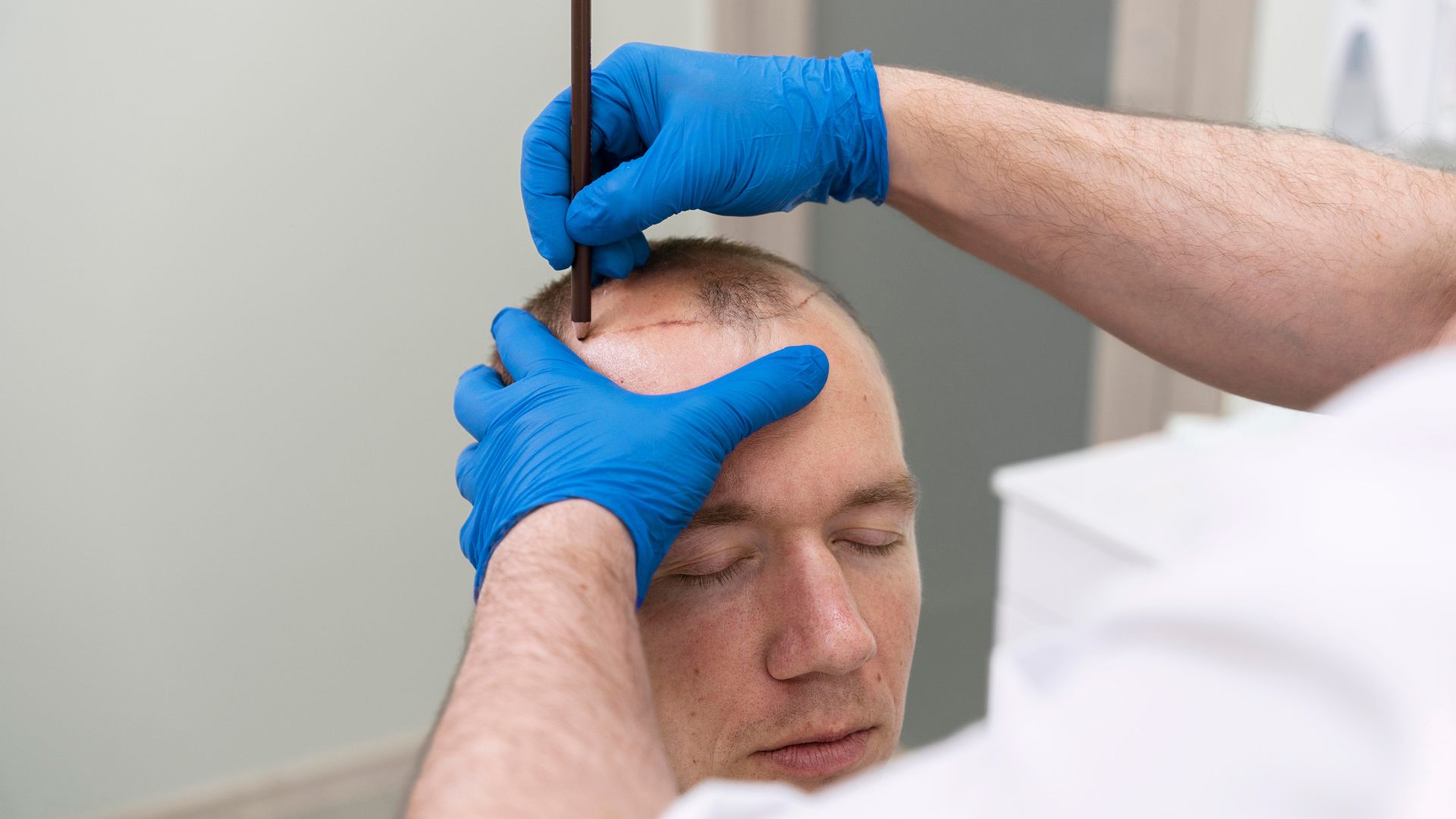
- Personalized Hairline Design: A customized hairline is designed according to the patient’s facial structure and age.
- Single-Hair Graft Placement: Single-hair grafts are often used at the frontal hairline for a natural transition.
- Multi-Hair Graft Density Building: Multi-hair grafts are strategically placed behind the hairline to increase density.
- Natural Angle and Direction Control: Each graft is implanted according to the natural growth direction of surrounding hair.
- Long-Term Planning: The surgeon considers future hair loss patterns to ensure the transplant continues to look natural for years.
How Should the Hairline Be Designed for Natural Results?
The hairline is arguably the most important factor in a Natural Looking Hair Transplant. Even a dense transplant can appear artificial if the hairline is poorly designed.
Natural hairlines are not perfectly straight. They contain subtle irregularities, varying densities, and gradual transitions.
Characteristics of a Natural Hairline
- Soft and Irregular Front Edge: Natural hairlines contain minor asymmetries and irregularities.
- Age-Appropriate Positioning: Hairlines should suit the patient’s age rather than attempting to recreate a teenage hairline.
- Natural Temple Integration: Temple regions should blend smoothly into the frontal hairline.
- Gradual Density Progression: Density should increase naturally from the front toward the mid-scalp.
- Facial Harmony: Every aspect of the hairline should complement the patient’s unique facial features.
A carefully designed hairline is often the defining feature of a successful Natural Looking Hair Transplant.
Why Is Natural Appearance More Difficult in the Crown Area?
The crown, also known as the vertex, is one of the most challenging areas to restore naturally. Unlike the frontal scalp, the crown contains a circular growth pattern known as a hair whorl.
Recreating this pattern requires advanced planning and technical expertise.
Challenges of Crown Restoration
- Complex Hair Growth Patterns: Crown hairs grow in multiple directions, making natural placement more difficult.
- Higher Graft Demand: The crown often requires a large number of grafts to achieve meaningful coverage.
- Extended Growth Timeline: Crown hair may take longer to mature than frontal hair.
- Visual Density Challenges: Because the crown is visible from above, density planning becomes particularly important.
For these reasons, crown restoration often requires additional expertise to achieve a Natural Looking Hair Transplant result.
Is Natural Density Possible for Fine Hair?
Many patients with fine hair worry that they cannot achieve a dense appearance. However, visual density depends on several factors beyond hair thickness alone.
A properly planned Natural Looking Hair Transplant can create excellent cosmetic results even in patients with fine hair.
Factors That Improve Natural Density
- Strategic Graft Placement: Proper distribution creates the appearance of greater fullness.
- Hair Texture: Wavy or curly hair often provides more visual coverage.
- Hair Color and Scalp Contrast: Lower contrast between hair and scalp can improve the perception of density.
- Donor Hair Quality: Strong donor follicles contribute significantly to final results.
- Customized Density Planning: Individualized treatment plans maximize available donor resources.
When Does a Hair Transplant Start Looking Natural?
Patience is one of the most important aspects of the recovery process. Hair growth occurs gradually, and natural results take time to develop.
| Timeline | Natural Looking Hair Transplant Progress |
|---|---|
| First Month | Healing continues, temporary shedding may occur, and the scalp recovers from the procedure. |
| Months 3–4 | Initial growth begins, and fine new hairs start appearing. |
| Months 5–8 | Density improves gradually, and hair becomes more visible. |
| Months 8–12 | Significant cosmetic improvements emerge, and hair texture becomes more natural. |
| Months 12–18 | Final maturation occurs, and full results become visible. |
Is One Session Enough for a Natural Looking Hair Transplant?
The answer depends on several factors, including the extent of hair loss, donor area quality, and density goals. Many patients achieve excellent results in a single session, while others may benefit from additional procedures.
Factors That Determine Whether One Session Is Enough
- Degree of hair loss.
- Size of the treatment area.
- Donor capacity.
- Desired density.
- Hair caliber and characteristics.
- Long-term restoration goals.
An experienced surgeon can determine the most appropriate treatment strategy.
Do Hair Transplant Results Look Natural?
When performed by experienced professionals using modern techniques, hair transplant results can look extremely natural.
The most successful Natural Looking Hair Transplant procedures are often impossible to detect because they blend perfectly with existing hair.
Signs of a Natural Hair Transplant
- Natural and age-appropriate hairline.
- Proper hair direction and angles.
- Balanced density distribution.
- No visible plug-like appearance.
- Smooth integration with existing hair.
- Long-term compatibility with future hair loss patterns.
Frequently Asked Questions About Natural Looking Hair Transplant
Can a hair transplant look completely natural?
Yes. Modern techniques combined with proper planning can produce highly natural and undetectable results.
What is the most important factor in a Natural Looking Hair Transplant?
Hairline design is often considered the most important factor because it directly influences how natural the final result appears.
Why is crown restoration more difficult?
The crown contains complex growth patterns and often requires more grafts and longer maturation periods.
Can patients with fine hair achieve natural results?
Absolutely. Strategic graft placement and proper planning can create impressive visual density even with fine hair.
How long does it take for a Natural Looking Hair Transplant to look natural?
Most patients notice significant improvements between months six and twelve, while final maturation typically occurs between 12 and 18 months.
Is one hair transplant session enough?
For many patients, yes. However, treatment requirements vary depending on the severity of hair loss and density goals.
Can people tell if I had a hair transplant?
A properly performed Natural Looking Hair Transplant should blend naturally with existing hair and be difficult for others to detect.
Does hairline design affect natural appearance?
Yes. Hairline design is one of the most critical elements influencing whether a transplant looks natural or artificial.
What makes a Natural Looking Hair Transplant different from older methods?
Modern procedures use individual follicular units, advanced implantation techniques, and personalized design principles rather than outdated plug methods.
Why do patients prioritize a Natural Looking Hair Transplant?
Because most people want restored hair that enhances their appearance naturally without obvious signs of cosmetic intervention.
Hair Transplantation FUE Details
To learn more about the FUE hair transplantation process, visit the detailed Hair Transplantation FUE page by Hair of Istanbul.